
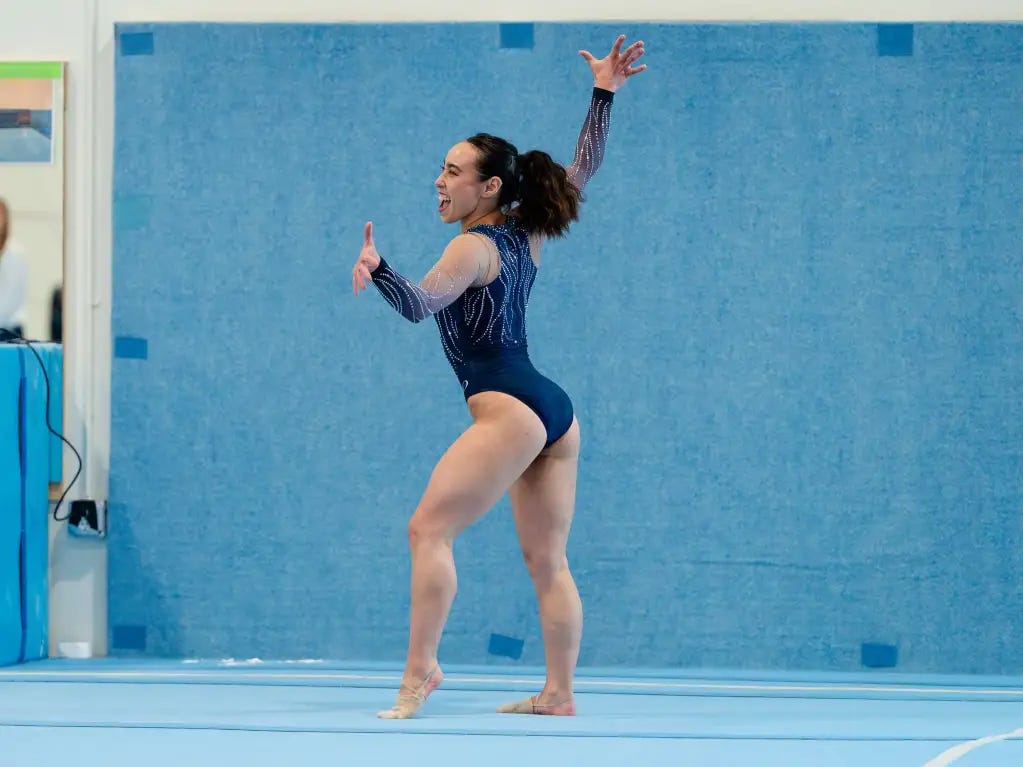
She’s baaaackkk.
Katelyn Ohashi and Suni Lee have just about broken the gymternet these past few weeks after announcing their returns to elite gymnastics.
Ohashi, a USAG and UCLA legend, famous for her viral perfect 10 floor routine, returned to elite competition two weeks ago at the American Classic after 13 years away from elite competition and 7 years away from competitive gymnastics in general.
After running out of NCAA eligibility following the 2019 season, retirement appeared to be the obvious next step for Ohashi.
Female gymnasts in America follow what feels like a formula, perfectly laid out for them and the success of their careers.
Usually, elite-level competition and a chance at the Olympics come before college.
After all, girls peak earlier in their careers. Or so they say.
After these elite athletes have the option, then at 18 or 19 or however old you are when your mom starts breathing down your neck telling you to fill out those college applications, to continue their elite career or step away from the opportunity to compete in the Olympics and compete at the Division I level.
By the time those four or five seasons in a collegiate leotard are over, it’s expected that these athletes have passed the peak of their talent; retirement isn’t just assumed, it’s expected.
So, when Ohashi stepped off the floor for the final time in 2019, fans celebrated the history she’d made and mourned the end of a career.
Then, nearly a decade later, she was back.
At 29 years old, Ohashi decided to keep chasing the dream she had as a child.
By the time the 2028 Olympics roll around, Ohashi will be 31, older than any female gymnast to represent the US in the Olympics since Marie Hoesly competed at 35 in 1952.
Age is just a number.
Who says girls have to peak at 18?
Not Katelyn.
Two weeks after Ohashi broke the gymternet by earning a bronze medal on beam in her first competition in seven years, another athlete announced her comeback to the floor.
Olympic champion, Auburn icon, (and face card legend) Suni Lee posted a video on July 14 that sent shockwaves through the gymnastics community.
“This is more than a comeback; stay tuned,” the post said.
Girl, I am SAT. Say less. I am staying tuned.

At 23, Suni’s comeback is less about age and more about resilience and renewing love for the sport that built her.
After two severe, incurable kidney diseases caused Suni to cease training, the gymnastics world was unsure it’d ever see her out on the floor again.
Now, though, after pushing the disease into remission, she’s returned to the gym and is ready for a comeback.
Both storylines scream the same thing.
The culture of gymnastics in the Americas is changing. If anything, it’s healing, from every angle.
Age? Just a number.
Illness? Just a roadblock.
Years spent away from the sport? Not a sign of retirement. Simply a chance to breathe.
For decades, gymnastics was a sport defined by expiration dates that caused athletes to ignore crucial hits to their physical and mental health, a grueling race against time where a twenty-first birthday felt like a curtain call. Ohashi and Lee are throwing the old formula out the window. They aren’t just helping to rewrite it either; they’re redefining what longevity in the sport looks like.
The era of the disposable gymnast is over. The era of autonomy is here, and it’s here to stay.