
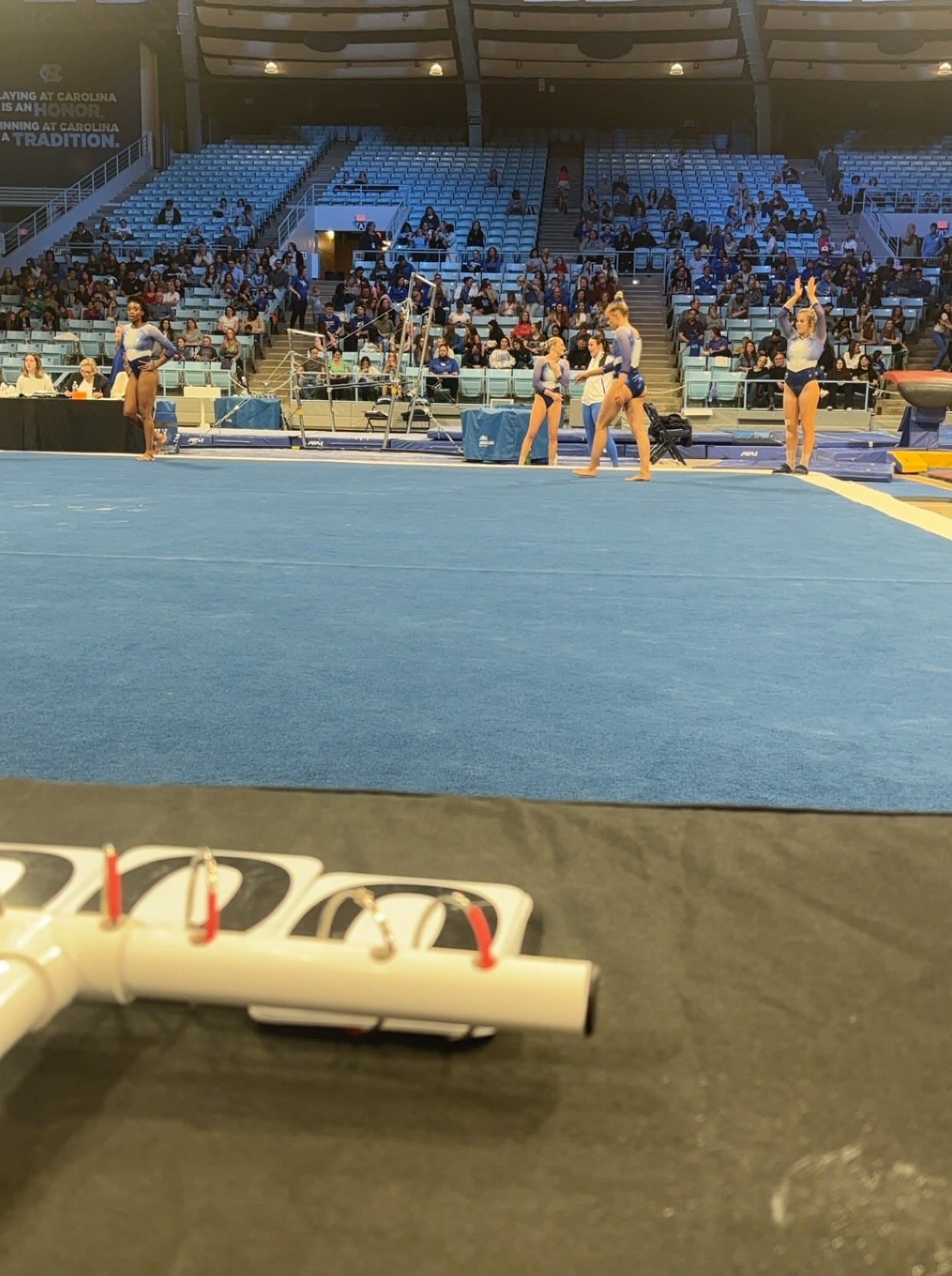
Growing up, I loved gymnastics. I practiced five days a week, I read books on the sport, and I kept up with my favorite athletes on social media.
These girls in Team USA uniforms looked so fearless in a meet. I was often jealous of them and of how composed they appeared at a meet, because despite my pure love for the sport, there was always something holding me back. Myself.
The conversation around performance anxiety and burnout in athletics has been something that has been pushed aside, ignored, and minimized, even as professional athletes become transparent about their own struggles.
In individual sports like gymnastics, the goal is always perfection, a 10.0.
One misstep? Deduction. Don’t cast high enough on bars? Deduction.
One too many deductions and suddenly you’ve lost the meet for yourself and your team. So much pressure for everything to be perfect.
When I was a junior in high school, I took a year off from competing. There were too many things to be anxious about that year: standardized tests, college applications, work, and AP classes. So many things to make sure I was perfect at.
I wish I had realized I needed a break sooner.
It’s hard when you recognize that the sport you’ve loved your whole life is burning you out, and your own brain is part of the problem.
Mental block after mental block pushed me further and further from progression; routines became less and less perfect. People didn’t talk about that kind of thing; everyone was too busy in their own head worrying about making sure they didn’t fall, or their toes were pointed, or they set high enough.
So to me, the problem was simply that I wasn’t talented enough and didn’t work hard enough to be successful.
After high school, I thought my competition days were behind me, and while, naturally, from time to time I thought of what could have been, I made peace with the fact that gymnastics had given me all it was going to, and that was okay.
At 23, I found myself at UNC-Chapel Hill pursuing my master’s degree.
They aren’t kidding when they tell you to treat your master’s program like it’s your full-time job. To avoid academic burnout, I needed to find something to do for myself. A work-life balance, if you will.
Club gymnastics called to me, but at the same time, I felt that fear of failure that had held me back from succeeding in the sport in the first place creeping back in.
Pushing it down, I went to my first practice.
That day, I fell back in love with gymnastics.
There is so much community in club sports. Freshmen who couldn’t bear to give up the sport they’ve done their whole lives, graduate students who are looking for an outlet, and frat boys just looking to learn a backflip because that’s much more interesting than breaking a pong table.
It was because of that community that I realized the only pressure I felt each day when I showed up to practice came from myself.
Eventually, I figured out how to work through it because, in all honesty, despite my fears, I was having so much fun.
Fear v. Bravery
The year before I returned to gymnastics, Laurie Hernandez spoke to a group of students at UNC about her battle with performance anxiety and burnout.
Laurie was a gymnast I grew up watching, who I resonated with deeply. We were the same age, and she appeared to simply step out on the floor and have fun.
After she became an Olympic medalist, she opened up about what was actually going through her head at the Games.
Fearless is the word people often use to describe Olympic gymnasts.
At 22 years old, Hernandez admitted to a room of college students at UNC that she was anything but fearless. She was anxious and overwhelmed, but there was also one thing she was despite the fear, anxiety, and burnout. She was brave.
Bravery does not ignore anxiety or fear, but it does overcome it.
Returning to a sport after three years away didn’t automatically cure my burnout, nor did it cure my fear of failure.
There were some days when I didn’t want to show up to practice after studying all day or knowing I had an 8 a.m. lecture the next morning. On those days, I still went, I got myself up, I went to practice, and did what I could.
What I didn’t do was push myself beyond my limits with the fear of not being perfect.
It was that method that made me brave.
Eventually, I had relearned old skills, created full routines, and even began working on skills I had absolutely no desire to touch when I was in high school.
Some of the best athletes retire before they ever get to compete in college, professionally, or even just at a level that could get them noticed by a collegiate/professional program because they’ve fallen out of love with the sport.
The desire to constantly be perfect and the crippling fear of failure will burn an athlete out before their time.
Allowing young athletes to understand that taking a break is not counterproductive but instead actually may be the most beneficial thing for their athletic career needs to be normalized and encouraged at every level.
Now, as I coach, I can recognize burnout in my own athletes. Their fear of failure is holding them back from things I know they can do.
The best part is, I understand. Breaks are encouraged, and conversations are had to ensure both a physical and mental reset.
Fearless athletes do not exist. But after my return to the mat and now as a coach, I see that they don't need to. Every single athlete who steps out onto the field, court, ice, or mat—who takes a necessary break, who speaks openly about their mind, and who competes despite their anxiety—is setting an example of what it truly means to be brave.
We might never score a perfect 10.0, but choosing to stay in love with the game is what pushes us toward real success, beyond a score.