
On February 21, the East Carolina Pirates took down a nationally ranked UNC baseball team 10-3.
Was it because bats were hot, and reliever Sean Jenkins put on a clinic on the mound? Or was it because sitting in my lap through the entire game was my stuffed baseball named Tommy John, whom I’d brought along with me for good luck after the Pirates had lost 10-0 the day before?
Three months later, in Boshamer Stadium, I watched the Pirates fall in a narrow 5-7 thriller to the Heels.
Now, yes, the Pirate bullpen was exhausted from a taxing two days of postseason play, and there’s something to be said about playing on your home field.
However, I couldn’t help but feel like I knew exactly why the Pirates lost. It was my fault; I was there, but Tommy John was not; he was sitting comfortably in my bedroom.
There is no shortage of superstition in sports. The batter who draws a cross in the dirt with his bat before taking his place at home plate, the gymnast who must eat the exact same meal and drink the exact same flavor of Gatorade the night before her meet, and the mom who cannot miss a single football game in her customized Golden Goose sneakers all firmly believe that these actions must occur... or else.
Playoff hockey has truly made me realize what an art form superstition in sports is.
One of my oldest friends grew up bleeding red and black Carolina hockey. Her father has been a season-ticket holder for years, and there are photos of her in 2006 in Raleigh, posing with the Stanley Cup, and a family group chat JUST for hockey talk.
Game two of the Eastern Conference Finals was a little too close for comfort.
“Everybody do something different,” Lindsey’s dad texted the chat.

Noticing she wasn’t wearing her oversized Hurricanes shirt, which she’d worn to watch nearly every other playoff game, Lindsey immediately changed.
The Canes pulled through 3-2.
I watched game six of the Eastern Conference Finals with Lindsey and her family, well, except her younger brother, who, after dinner that night, rushed to his apartment to make sure he was seated comfortably in his lucky spot on his couch. The rest of the family didn’t mind. Anything to get a chance at the Cup.
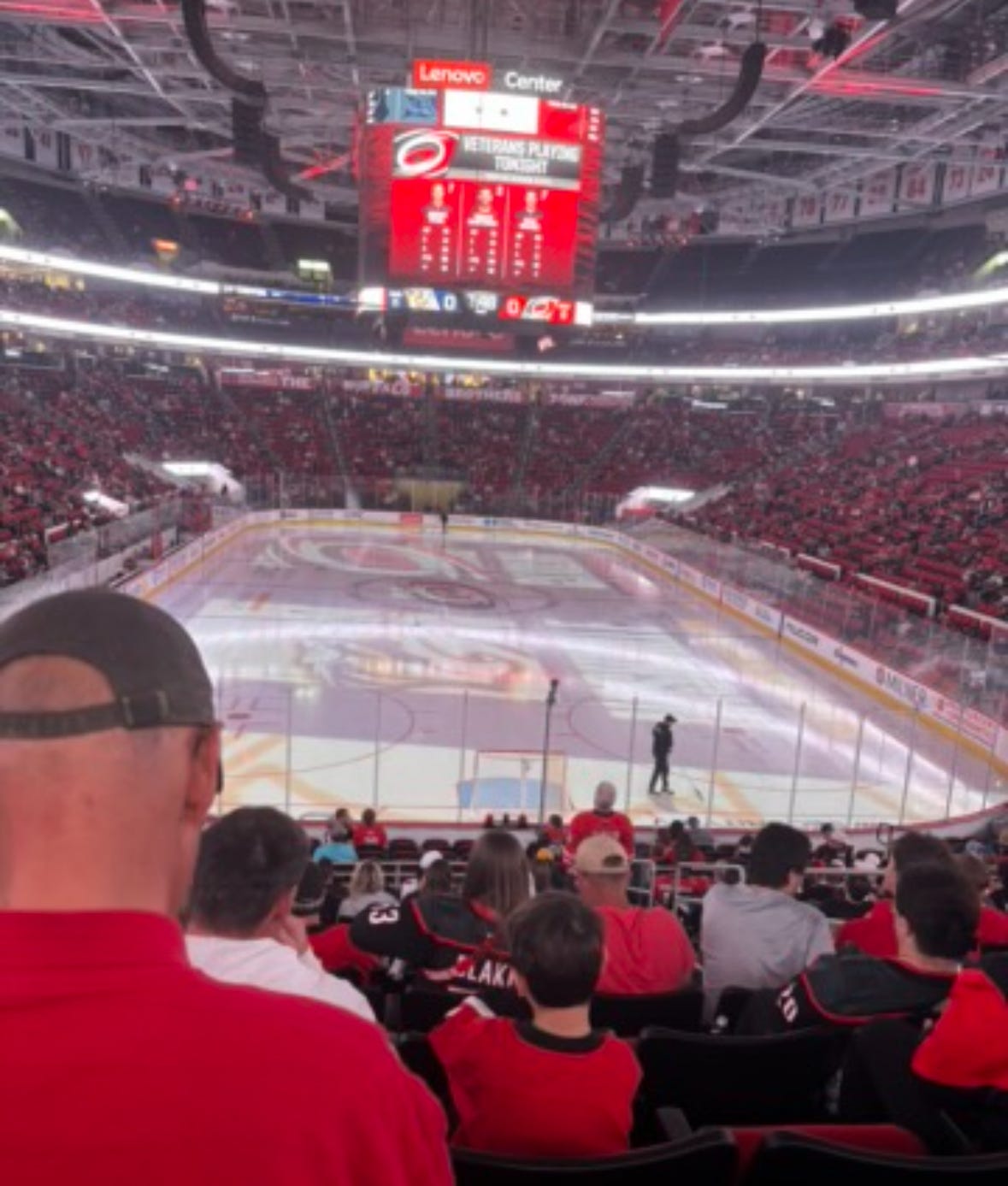
For the first time in 20 years, the Carolina Hurricanes are in the Stanley Cup Final. I was four the last time the Canes made it out of Conference Finals. I have no memory of the win, of the celebration, of the superstition.
This year, though, as a 24-year-old sports fan who thrives on rivalries and the raw human emotion brought out by sport, I’ve been locked in.
For game two of the Stanley Cup finals, I was sat. Not an avid hockey fan, I didn’t have any pre-existing superstitions. But then the Knights were up 2-0, and I felt somehow responsible.
Shutting the game off, I headed to bed; live stats would have to suffice.
"The second I left the couch and went literally anywhere else, they came back,” I texted Lindsey after the Hurricanes had secured their 3-2 victory.
“They came back when I went to the kitchen to brew coffee. I laid down on the kitchen floor,” she replied.
Sports, by nature, create community in many ways. Superstition creates a new kind of community and connection.
We truly feel we are doing whatever we can to help our team win, and the best part is, no superstition is too abstract. Whatever it takes, whether it’s a pre-game routine, a shirt, a spot on the couch, a stuffed animal, or listening to the broadcast from another room when things are looking grim.
What would sports be without superstition, without a fan’s emotional tie to the outcome of a game?
With the series tied 2-2, Lindsey will make sure that the oversized grey shirt is ready to wear, Jake will get comfortable in his spot on the couch, and I will make sure that I don’t say a word about the outcome of the series itself. That’d be bad luck after all.
While we know, logically, that our actions have no true impact on the outcome of a game, that a shirt is just a shirt, and a kitchen floor is just a kitchen floor, sports aren’t about logic. Sports are about connection, emotion, and pure blind belief. As long as our teams are taking to the field, or the ice, or the diamond, we will continue to believe and continue to hold tightly to the art of superstition- whatever it takes to bring home a win.