
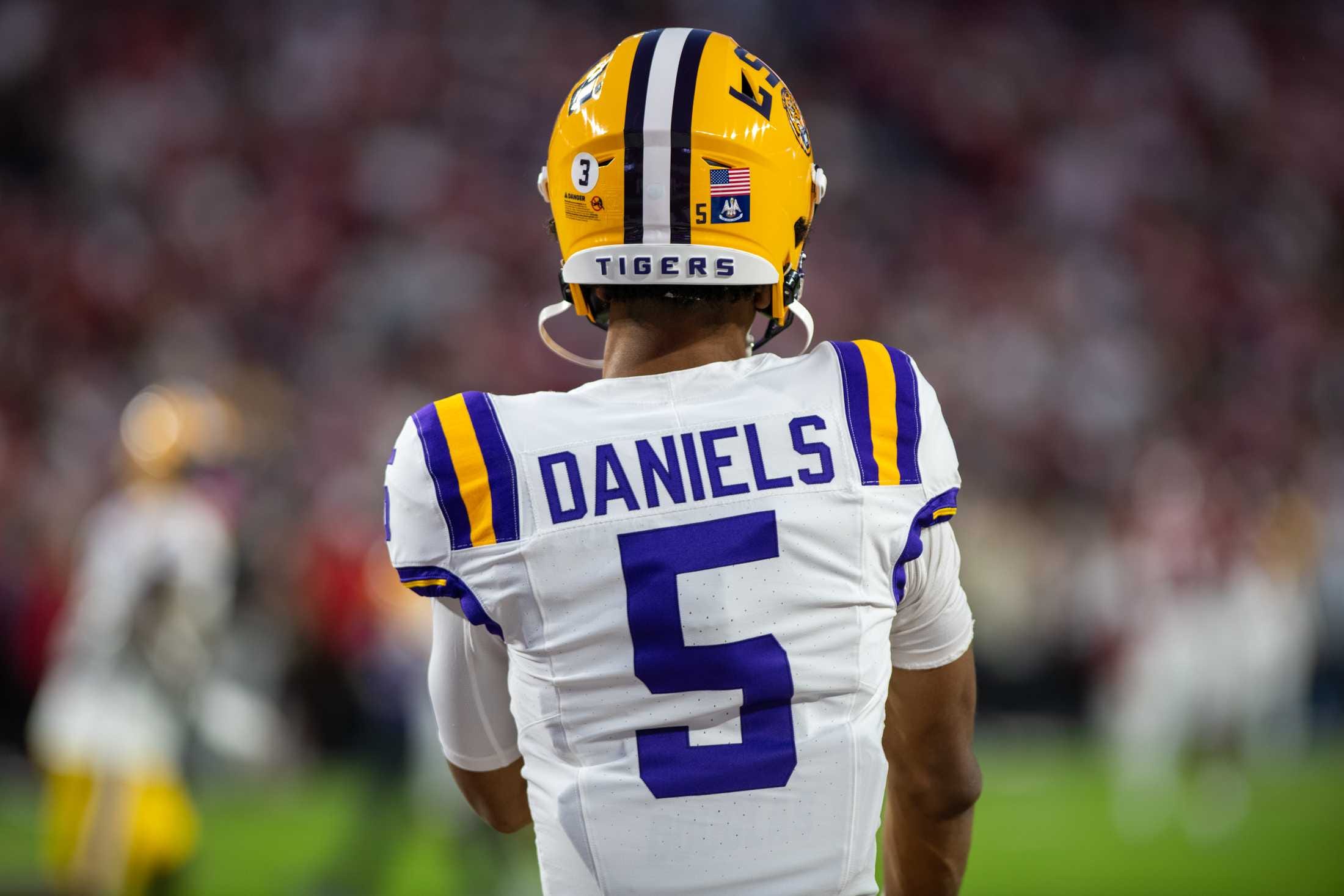
Washington Commanders quarterback Jayden Daniels has inspired me this week.
While his recent legal actions have become somewhat of a punchline to sports fans across the country, he actually highlighted a fascinating truth about modern athletics: there is profound power attached to the number on an athlete's back.
As a former gymnast, I didn’t initially understand the obsession with picking a jersey number. However, since entering sports writing, I am reminded daily of how sacred that digit is.
Even if, as a high school freshman, you were handed a random number, because naturally the returners got first dibs. That number worn on your back for your first season will stick with you, and maybe even become an identity.
For professional athletes who have excelled above the rest, representing their programs and their communities at levels people only dream of reaching, name and number have the opportunity to become synonymous.
When the time comes for them to hang up their jersey, inevitably, there’s something attached to it now. To the name. To the number.
And then, the number is retired by the organization as the highest form of honor.
However, now, in the ever-changing transactional landscape of sports, jersey numbers are beginning to mean even more.
With players constantly changing teams, wearing one number from draft night to retirement is rare. Some manage it: Juan Soto has donned No. 22 from his Nationals debut to the World Series with the Yankees, and now with the Mets. LeBron James has carried his numeric brand across decades and multiple franchises.
However, Soto and James never played college sports. Retiring a collegiate number is an entirely different ballgame.
Pro teams can retire numbers anywhere a player goes, but college programs only get one shot at honoring a player’s brief window on campus.
Playing basketball at UNC is an honor, a blue-blood reputation and a culture so deep it bleeds into the surrounding town.
However, athletes who play in Tar Heel blue know that they’ll never get the chance to play with the number 23 on their back.
The legacy Michael Jordan left on Carolina basketball was so great that the program honored him by retiring his number.
However, that number was retired years after he last played in the Dean Dome.
Former LSU quarterback Jayden Daniels seems to believe his own legacy deserves more immediate protection.
Just two seasons into his NFL career, Daniels has made it known that he is unhappy with the program’s decision to allow another athlete to compete wearing the number 5.
Last week, Daniels issued a cease-and-desist letter to LSU after the program allowed sophomore transfer DJ Pickett to wear the number, and boyyyyy are people amused.


Its never ending.
Like former LSU quarterback Joe Burrow’s number nine, the number five has not been retired by the program but has been kept out of rotation in recent seasons.
Just two years after Daniels’ final season with the Tigers, another legacy may be formed under the jersey number five, leaving Daniels to defend his past.
There is power in the number on an athlete’s back.
While Pickett may not go on to create a lasting legacy in purple and gold, there is the possibility the young cornerback might go on to make a name for himself, and a new one for the number five.
Daniels may receive backlash for the legal threat for seasons to come, but it also reminds us that in sports, a number hasn’t been just a number in a very long time.
Hi Abbie! Glad to have found your substack! I really like the points you made about while he is a meme for this at the moment, you can understand where he is coming from and jersey numbers do carry meaning for many athletes.
I recently published a preview of the new premier season if you’re interested in checking it out.
https://mohamedwarsame.substack.com/p/premier-league-2026-27-predictions?r=75wy83&utm_medium=ios